


Mind is the word we use to talk about our thoughts, emotions, mental states, and sense of self. A revolution in how we understand and experience mind has been a long time coming. This revolution is perhaps best generally described as ecological. For as long as humans have experienced thought and a sense of self, it has been noticed and noted that our experience of mind (a private and particular feeling) is somehow also inseparable from our experience and understanding of others and our environment (an openness and interconnection).
Even though mind is individual and intimate, in our most vivid and life-changing moments, we encounter mind differently—as expansive, flowing in and through the body, an unbroken intimacy that includes us but is not contained by us. This can happen in joy or pain, creation or destruction, but at some point, we will all experience it. It can come with the birth of a child or in making love. It can come in prayer or meditation or during a long hike.
It can come while swimming or eating ice cream or sitting on a park bench. It can be a moment of sudden insight, creativity, or intellectual discovery. It can come through reading a book, listening to music, having a great conversation or being engrossed in an artwork. We might experience it at a concert or at the football stadium or while watching a film. It is close to what the psychologist Mihaly Csikszentmihalyi calls flow except that it has an important additional level of awareness and value—that of recognizing oneself in what one is interacting with, be that a landscape, a song, a poem, or another person’s eyes and energy.
As William Wordsworth writes: “True beauty dwells in deep retreats, / Whose veil is unremoved / Till heart with heart in concord beats, / And the lover is beloved.” In these moments where Wordsworth claims “we feel we are greater than we know,” mind is no longer about “I” or “you” or “it” but rather about the lover and the beloved as chords in the same song. In the words of Toni Morrison, “the world's beauty becomes enough.”
One such moment came for me when I was driving alone from Atlanta to Seattle. I’d grown tired of highways and left the main road. A few hours after sunset, I ended up on a thin route in the desert, unable to move. The road was so crowded with cottontails that I had to stop for fear of hitting them. The rabbits darted on all sides of the car like tossed rocks, flint sparking. I turned the engine off to wait it out and catch my breath. Switching off the lights, I noticed the sky was tangled with stars. Landscape flooded in. I pushed the door open and stepped into the desert, feeling the tremors of open space. I eased towards the front of the car, seeing on every side of myself. The hood was still warm. Mind was nowhere and everywhere.
Alan Lightman, a physicist and professor at MIT who also writes for The Atlantic about being “tied to something larger than ourselves” relates a similar experience: He was alone in a small boat off the coast of Maine, returning to an island. The sky was clear. It was after midnight. There was no one else on the water. He stopped, turned off the lights and engine, then lay down with his back to the boat’s wooden base, the ocean beneath him, panoramic stars above, no human sound except his breathing. He wasn’t thinking about anything yet felt fully present; mind was no longer his but something expansive. It was in the ocean swaying the boat beneath him, in the light pouring through the stars, in the air touching those same stars, that same ocean, that same boat, his skin: “I felt like I was falling into infinity,” he said, “like I was merging with the stars, and not only with the stars, but with the cosmos.” As a scientist, he knew such an experience could not be proven or explained through the methods of science, that most would dismiss it, as it could not be captured or measured by modern third-person tools: it only seemed evident to the point of view experiencing it. And yet wasn’t this a kind of knowledge? In relating his story, was something not being shared, spread, experimented with, even tested? This paradox—that what we experience as most intimate seems to be outside of ourselves, and that science, the pinnacle of knowledge, seems unable to know it—is the mystery at the heart of this project.
What is mind and where does it start? Can we draw lines between mental and physical, between individuals and ecologies? Or is there no absolute beginning and end? Perhaps such distinctions only hold from a particular position, in the same way an atom can be both particle and wave, depending on the measurement. Perhaps environment and self are only different when measured, positions dependent upon where they are being measured from. When we try to draw lines, we cannot be sure how to separate our own thoughts from what we have read, heard, watched or learned, or from what embeds us in the moment we are thinking. From the time we are children, we navigate the world and take the world into us, process it and make it our own, but the lines where what is given and what is built begin and end are hard to distinguish.
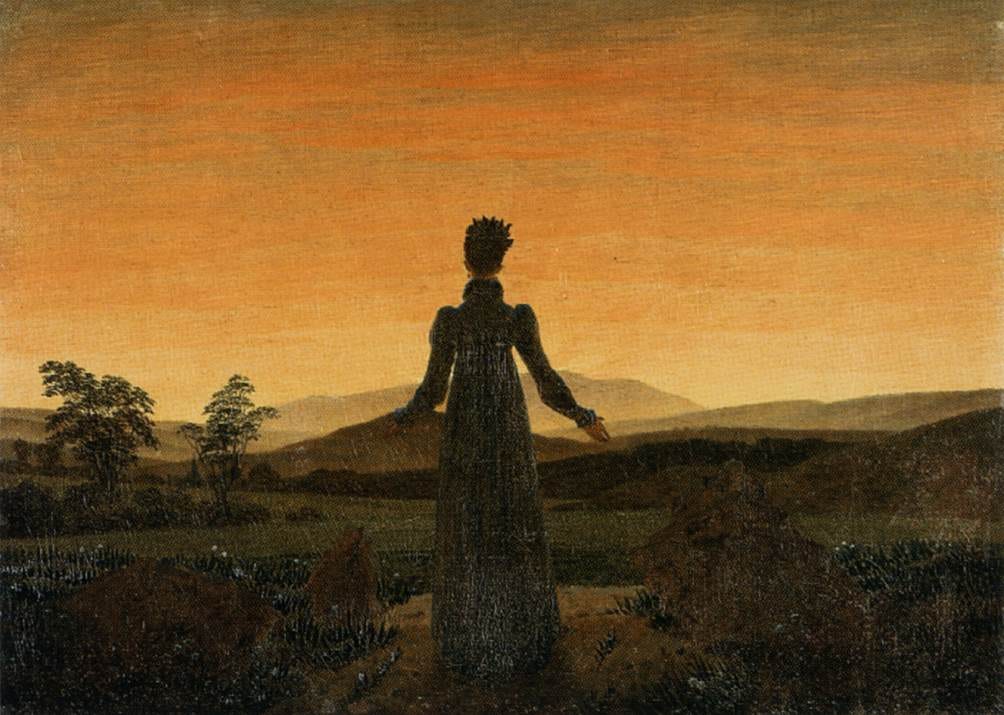
As radical as the idea of ecological mind may sound, it is not new and has been expressed by thinkers all over the world for as long as there have been thinkers. It has been present in all our traditions, and all our sciences. Great philosophers, biologists, and psychologists have sought to understand mental and physical as a common environment. Still, these numerous paths have occurred in diverse disciplines and often stayed within those niches with no way of being recognized widely as a new narrative. Fortunately, modern developments in neuroscience and evolutionary biology (and many other fields) are providing a common scaffolding; the narrative is clarifying for more and more of us.
One way into this that relates to my fascination and study of the hippocampus, (which those of you who listen to Love & Philosophy will know well). With the recent discovery and understanding of what scientists refer to as the brain’s GPS, for example, we can sense something else about the embeddness of bodies and world. This ‘GPS’ is really the assessment of a system of cells in the hippocampi as firing in sensory relation to a body’s place in all sorts of environments, from the conceptual to the geographical (it is actually not quite so simple as a ‘GPS’) and in so doing, show us a new way to hold what irreconcilable. Metaphorically or otherwise, we have a new way to connect the dots between finding our way in the world and finding our way in our thoughts, between our sense of direction and our sense of self, between the moments mind is private and the moments mind is expansive or shared.
That cells fire in relation to space is a realization so strange and unexpected that it’s taken half a century to come to grips with it. The first positioning neurons—now known as place cells—were discovered in animals in 1971 and confirmed in humans around the turn of the century. Many revolutionary discoveries win the Nobel Prize within years of happening, but it took nearly five decades for this discovery to garner that honor. Even now, most of us do not understand the magnitude of what has been found relative to how such scientific paths can open us beyond either/or. In fact, few of us have ever even heard of place cells much less of the other cells in this family of positioning neurons (grid cells, border cells, head direction cells, etc.) that we carry in our nervous systems.
There is, however, a way in which this knowledge of ecological navigation has long been reflected in our systems of thought. Mind and nature have always been connected, as have minds and minds. Much of what we do with our lives is, in one way or another, about trying to express, experience or expand exactly that connection.
In ancient traditions of contemplation, definitions of mind and ecology were intertwined from the start. A basic idea of Taoism, for example, is in realizing that human life and mind are part of a larger environmental process. Environmental settings such as the Garden of Eden are at the heart of Biblical notions of oneness. Likewise, many Buddhist traditions focus on the inter-relatedness of mind and nature, teaching that to harm any part is to harm the whole. Monks and nuns of all traditions are often taught to look at the plants, land, and creatures around them as part of their sense of self, and to align their needs and desires with those of their ecosystems. Prayer or meditation is the place where mind and nature meet. In the Central Andes, the environment has long been anthropomorphized through an idea known as taypi whereby humans form a continuous structure with nature, one which extends from areas such as the head, heart and stomach into the cosmos. In Japanese traditions, seeing through the dualism of mental and physical is at the heart of the Zen koan. The Qur’an contains a theology of ecology which teaches that mind is a tool for environmental stewardship. The whirling dance of the Sufi traditions is a way of merging thought, bodies, and space. Poets such as Rumi interlink mind and environment: “Be like the Earth for modesty. Appear as you are. Be as you appear.”
Most Americans have heard of Henry David Thoreau and his sojourn to Walden Pond, an act which had everything to do with the mind’s interrelation to what surrounds it. Many have also heard of Nature by Ralph Waldo Emerson in which he compares mind to the structures of the environment, “Every spirit builds itself a house; and beyond its house a world.” Later, Emerson writes more directly that nature is “mind precipitated.”
Before Emerson or Thoreau’s ecological understanding of mind, however, there were Native American philosophies. Paula Gunn Allen of the Laguna Pueblo offers a clear overview of this insight:
“We are the land... that is the fundamental idea embedded in Native American life... the Earth is the mind of the people as we are the mind of the earth. The land is not really the place (separate from ourselves) where we act out the drama of our isolate destinies... It is rather a part of our being, dynamic, significant, real. It is our self...It is not a matter of being ‘close to nature’... The Earth is, in a very real sense, the same as our self (or selves) ... That knowledge, though perfect, does not have associated with it the exalted romance of the sentimental ‘nature lovers’... It is a matter of fact, one known equably from infancy, remembered and honored at levels of awareness that go beyond consciousness, and that extend long roots into primary levels of mind, language, perception and all the basic aspects of being...” (1979a: 191–192).
An understanding of the space around us has long been a crucial element in European traditions of thought, as has concerns over the relation between mental and physical. Immanuel Kant developed an intricate philosophy linking the formation of space and time to a priori sensible intuition; in other words, as John O’Keefe puts it through the modern lens of neuroscience, the idea “that our sense of objective three-dimensional space is given to us by the brain and is not a property of the physical world”—the inner gives the structure we see in the outer, our neural interaction with the environment is what we sensually experience as ecology. An entire European tradition of philosophy and literature was spawned (somewhat) in opposition: Kant can be interpreted as claiming the inner world creates the outer structure, but others thought inner structure came from the environment. The classic either/or.
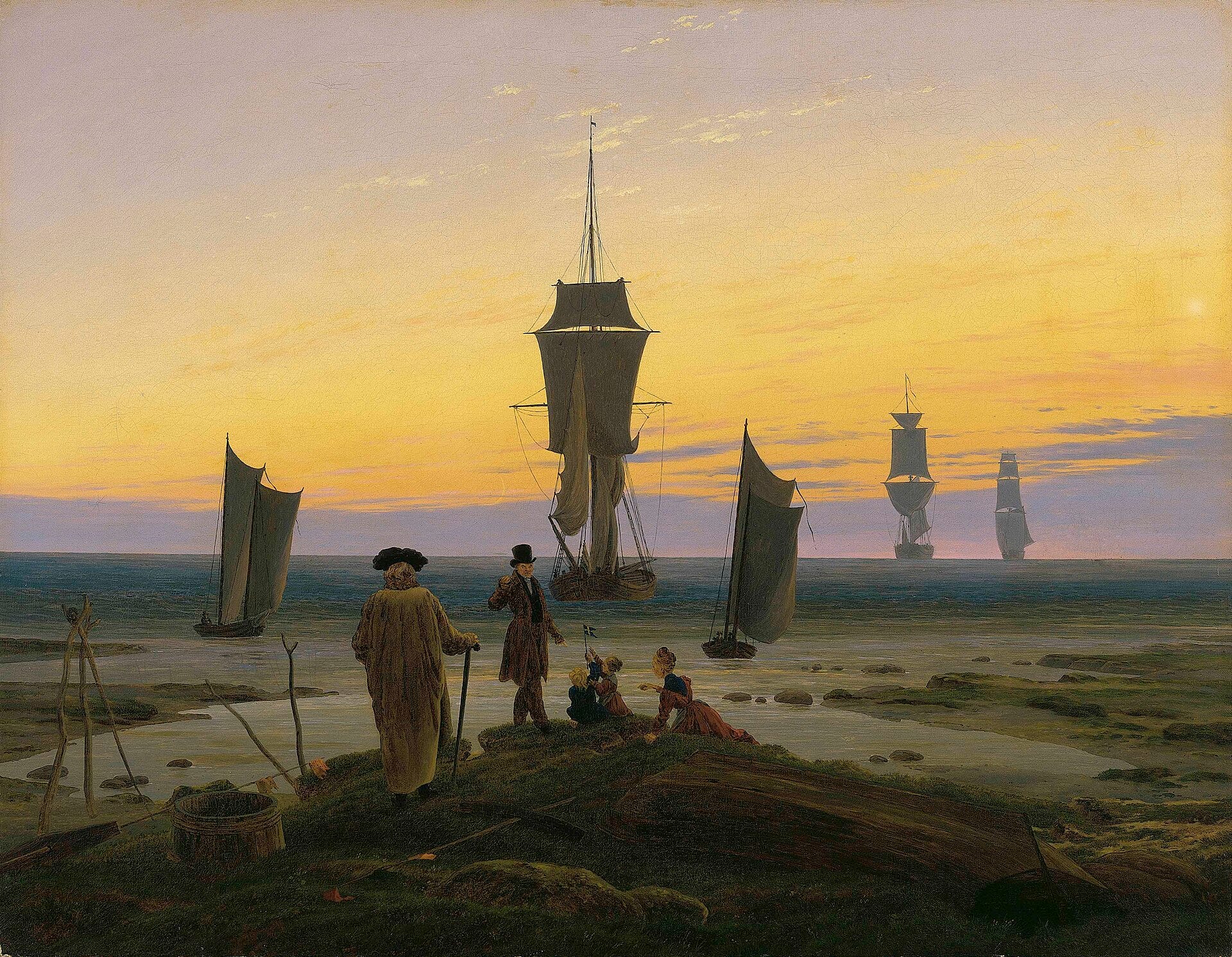
Philosophers such as Schelling and Hegel, picking up on a dynamic understanding of nature found in Goethe and Herder, wrote into a philosophical tradition of Naturphilosophie, a current in German idealism which sought to understand nature in its totality (a totality which includes mind and consciousness). Many fevered ideas linking the physical to the mental or spiritual have been highly inspirational, highly controversial, and poorly understood—sometimes dismissed as a drunken metaphysics, too in love with nature to see it clearly. Nietzsche, one of idealism’s fiercest critics, engendered a different understanding of the ‘natural’ power of mind, equating self and world counterclockwise. German Romanticism saw nature as visible spirit and connected it with the emotionality of mind, as felt in the music of Brahms and Wagner, the fairy tales of the Brothers Grimm, or the knot-in-the-throat landscapes of Caspar David Friedrich. Lake poets such as Coleridge and Wordsworth and further English Romantics such as William Blake, John Keats, and George Byron turned metaphors of nature into reflex, and our experience of beaches and forest paths and mountain peaks now nearly always resonate with their glow. This back and forth between mental and physical seems to have no end. In nearly every country and time, both before and after the examples given above, one finds a similar push and pull between harnessing, understanding, and explaining nature via mind, or mind via nature. The history of technology is also full of kinetic conversations looping both. The natural sciences themselves developed into their modern forms from this same intellectual dissonance.
Reaching closer to neuroscience, in the 1950s, a psychologist named J.J. Gibson challenged a widely held assumption that the nervous system constructs our perception (as expressed in the Kantian idea above) claiming instead that it was a direct interaction, that it happened ecologically. Gibson first used vision as his example—arguing that the nervous system produces our experience of vision by directly relating to the stimulus rather than through internal processing of some kind. Later he expanded this into a multi-sensory approach in The Senses Considered as Perceptual Systems. According to this view, we interact with our environment via its affordances (what is actionable in this ongoing environmental encounter from our position, what interaction is and is not possible) which can be either positive or negative and change depending upon the creature, so that the same environment can have many different kinds of affordances for many different kinds of creatures. We might use a wooden log to sit upon and rest, for example, while an insect might use it for food or a home. Following from this, creatures cannot be seen as separate from their ecology but rather as directly inter-relating parts of it.
Roger Barker, another founder of this approach from a different angle, wrote his classic work Ecological Psychology in 1968, arguing that human behavior was radically situated within context: One is not, for example, of quite the same mind in the context of a church as one may be while in a bar listening to music. We are not quite the same when we are at work as when we are at a football match. There is something different about our experience of mind while on a solitary hike compared to when we are in the midst of a political rally. Mind is thus seen not as something solely generated from within but rather a specific individual interaction with regularities by which we distinguish environments. The problem here is that it tends not to account for the very real patterns or habits (called representations or codes in neuroscience and philosophy of mind, though these words imply a determinism or rigidity that is itself problematic) that can be assessed in the brain (and body) and affect our psychology regardless of sensory stimulation. It also seems not to account for the ways interactions over time and through development (both individual and via inheritance) set psychological parameters.
In other words, affordances and constraints are not only external. The nervous system develops in large part precisely in order to be able to operate with such patterns and habits, to find and maintain an alignment by which it keeps the inner world of the body humming regardless of what goes on outside. These are not static findable representations and codes (nothin is locked away in our heads producing our psychological states), and yet there are distinct habits and patterns of activity that are inseparable as the tree of our brain and nervous system. Thoughts and emotions are not only stimulated by way of the environment. Rather, both are in constant dialogue and this very process is our psychology. To hold both these things in mind scientifically (within one theory) has been illusive, however, as people tend to choose either one side or the other to prove. A true ecological view (that would also include all those working in fields beyond the life science, philosophy and psychology) would mean letting go of this either/or and defining mind as an ongoing process, its measurement always understood as relative to position, and each position of equal worth. And it could also mean understanding knowing as an act of love and care.
Something similar is true on a wider level of sociology and our environment. Around the same time the changes mentioned above were taking place in psychology, for example, a marine biologist named Rachel Carson was writing Silent Spring (1962), a book that linked thinking about our environment to the health of our environment, sparking a grassroots movement awakening people to the interplay of thought and ecology and leading to the creation of the U.S. Environmental Protection Agency. In these same years, this new awareness of the interconnectedness between human thought, action and the environment (in both directions) was developing towards a new “systems approach” in biology, one now beginning to change standard views of genetics and ecology and heading towards the same inertia of new insight coming from complexity theory and dynamical systems.
Throughout the Fifties and Sixties, much of this was anticipated in a book called Tree of Knowledge (1983) by a young medical student named Francisco Varela and his teacher, the cyberneticist Herberto Maturana, and in two groundbreaking books Steps to an Ecology of Mind and Mind and Nature, by the anthropologist and (many other things) Gregory Bateson. Though ridiculed at the time for their simplistic book linking biology and mind, Varela and Maturana’s work would mature and branch into directions that have since become foundational to much of today’s cognitive science. Bateson, who met Margaret Mead on an anthropological trip near the Sepik river in New Guinea (they soon married and traveled together to Bali for fieldwork) combined disciplines towards a new understanding of mind and matter as co-creating systems of interconnected influence.
Taking cues from those above, the philosopher and psychoanalyst Félix Guattari and a Norwegian philosopher named Arne Næss made separate attempts at decentering mind and harmonizing the individual with the environment, a way of doing philosophy now known as ecosophy. Guattari, alongside Deleuze, introduced the rhizome, a biological conception of mind and knowledge acquisition that echoed cybernetic and systems approaches. Næss, inspired by the work of Spinoza and Rachel Carson, became the father of deep ecology, leading towards the work of Derrick Jensen and Joanna Macy (and later Timothy Morton) and the gifts of poets Wendell Berry and W.S. Merwin. Ken Wilbur and others began the integrational approach. Donna Haraway extended this towards a new feminine, animal, machine hybridity of mind. Sarah Whatmore looks at how this hybridity is geographical. Altogether a version of Douglas Hofstadter’s strange loop, except with anonymity rather than closure.
Throughout the Eighties, all this still operated on the fringes of academic philosophy. By the Nineties, however, a new generation of philosophers and scientists had absorbed much of this interdisciplinary exchange and in 1991, a biologist and neuroscientist (Francisco Varela), a philosopher (Evan Thompson), and a psychologist (Eleanor Rosch) came together to write a groundbreaking book called The Embodied Mind which prioritized body and environment alongside the nervous system, and attempted to widen academic philosophy to bridge not only its many niches (continental, analytic, phenomenological) but also Eastern traditions and practices regarding mind, which until then had mostly been ignored in philosophical programs in the West. At that time, analytic philosophy, still pivoting around the dichotomy between mental and physical, was marshalling its forces inwardly towards a mechanistic and computational model of the brain, with definitions of mind considered to follow from that model which would also be surprisingly helpful, though not without first widened the seeming gap between mental and physical and to become the “mind-body problem” & “hard problem of consciousness”.
The authors of The Embodied Mind, however, were moving towards a different understanding, one which said the nervous system and body were inseparable from one another, and from their context and environment, and thus so was mind. One that said consciousness and mind were not the same pattern. To understand mind would mean moving beyond the mental/physical dichotomy, connecting our private and particular feelings to the openness and interconnection we feel in moments of stillness and expansion, and holding the second person tensions whilst observing these experiences with third-person (scientific) accounts. This was hugely ambitious, and somewhat awkward. Still, these were the first wobbly steps into a wider space in philosophy of mind, one which took our phenomenological experience seriously and asked how this experience connected to the body, and how that body connected to the world, and how that world connected back to the body. Mind and brain, inner and outer, individual knowledge and scientific knowledge—these were imagined to be part of a continuous, dynamic loop of interaction which the authors called embodied and enactive. In this reading of philosophy and science, our relationships and the experiences we have through literature, poetry, music, art, meditation, and our connection to our bodies and to nature deepen into paths towards a potential change of mind.
The unusual authors of The Embodied Mind met and joined with others—such as the troubled monk Chögyam Trungpa Rinpoche, founder of the Naropa Institute; and the young Dalai Lama, who was embarking on a similar path, relating his own training to Western science at the time—to explore together what science and spirituality really mean by mind. In so doing, new paths opened, and others joined to lead us closer to understanding how finding one’s way in the world is not one and not two but ecological, not only mental or only physical and not “mental and physical” but rather dynamic and relational. Meanwhile, our understanding of the brain was moving in a similar direction.
John O’Keefe, the scientist to first find and record what he later named place cells in the brain, stumbled upon the first evidence of our inner navigation system in 1971, about the same time Gregory Bateson was planning his work on the ecology of mind. It happened almost by accident. As he tells it, while looking at particular cells for sensory response, “I began to suspect that their activity didn’t depend so much on what the animal was doing or why it was doing it but had something to do with where it was doing it… one electrifying day I realized with a flash of insight that the cells were responding to the animal’s location or place in the environment.”
Soon, a young couple, May-Brit Moser and Edward Moser, would come to O’Keefe’s lab to learn from him, and eventually start their own lab together and discover the next clue in the brain’s GPS, the grid cell. By 2014, when May-Brit, Edvard and John O’Keefe shared the Nobel Prize, it had become clear that our nervous system interacts with its ecology much like a Global Positioning System (again, to put it in general terms, though new studies now show it is also more like a SatNav kaleidoscope; such metaphors are always inadequate). As had already been documented, the very same area of the brain that held the GPS was also (and unquestionably) crucial for memory and knowledge acquisition (people who had damage in this area, for example, lost much of their capacity for episodic or autobiographical memory, well documented in the paradigm case of H.M.).
Until these (and similar) discoveries, it had been implicitly assumed (even if explicitly not) that the brain was a closed system isolated from the world outside, and that memory, thought and knowledge were equally separable. (Somehow the common medium of the body was often overlooked, though many others were coming to similar findings that understood bodily and environmental mind; see Ed Hutchins, for example.) This assumption mirrored the same old debate about mental and physical—assuming that the mental is unseen, locked away in the head or brain, while the physical is outward and observable, assuming thining actions to be distinct from environmental actions (though Carson was also showing this was more complex). But if these cells were firing in real-time relation to the environment, changing their firing patterns when that environment changed, the entire partition of inner and outer needed to be reconsidered, or at least our understanding of brain, body and environment would eventually need us to reconsider the separations we were making relative to inner and outer space. Together with other developments happening in the disciplines discussed above at this same time, a new narrative of mind and circulations beyond either/or began to emerge, one which has direct consequences for how we understand our thoughts and mental health in connection to our ecology, one that also expands our experience of the inner self such that inner is what we explore as we navigate an ecology.
That new narrative unfolds in all sorts of ways through Love and Philosophy and Holding Paradox and this blog and my other upcoming books through the stories of the scientists, philosophers and seekers that pioneered those paths. Fortunately, the women and men at the heart of this shift (and the many out there still working to make many such ways) are extraordinary and we can come to understand the science and philosophy by way of getting to know them. Their lives cover the world and its disciplines with a natural, unbroken rhythm, and their stories intersect and rise together, meeting at the center at just the right time. By following the lives of some of those who have shaped the ecological worldview and the scientists who have opened us to a different understanding of the body and nervous system, a new experience of mind emerges that may help us better understand ourselves and our place in the world and give us a new appreciation of dialectic. At least that is the hope with which I write and have these conversations and continue in to try and bring these stories into one that makes sense across bounds.
In telling these stories of the many who have brought us these sensual and bodily and ecological narratives of mind, we have to get used to holding tensions, to understanding care as partly about ambiguity, and to triangulate together in unusual, bold braids—such as those of science, philosophy, and spirituality. Even to say the word ‘spirituality’ in the same sentence as ‘science’ or ‘philosophy’ will make some uncomfortable, and maybe it should, because the razor’s edge is endless. Still, what I mean by the word ‘spiritual’ is what motivates and moves us, be that along the lines of art and music, or values and faith; whatever makes us want to live and love and become better and seek something more, which is what science and philosophy also do at their best. I will not be able to take every route I wish I could take here or explain everything I wish I could explain in any post or conversation on Love & Philosophy or Waymaking by Holding Paradox or in any one of the books. This is one telling of a story that could be told numerous ways. Many great minds and so much great work have gone into the traditions woven together here that it would take many more lifetimes to do them justice or say all that needs to be said. For that reason, please check all the bibliographies and compendiums that come along with the books and that are also on the website. And please don’t hesitate to share your own resources and add to this list.
Thank you for being here. Lovely journeying with you, Andrea
Hegel on Love: From the Archive

It is a strange and wonderful fact to be here, walking around in a body…We are here. We are wildly and dangerously free. ― John O'Donohue
Ecological is a word that we want to expand to mean more, too.
What often gets missed in these conversations is that a human being is formed long before language begins. A child is born into a field it cannot yet name, but it is already absorbing it. Not only the direct environment, but also the indirect one: atmosphere, tension, rhythm, safety, distance, warmth, emotional instability, the way people look at each other, the way silence sits in a room, the way history moves through a family without ever being spoken. All of that is taken in before words, before concepts, before any clear narrative of self.
So when people speak too quickly about “essence,” “identity,” or even “meaning,” they often forget that the foundation was not originally linguistic or conceptual. It was existential. It was bodily. It was affective. It was lived before it was understood.
And this is also why a child relates to the world differently than an adult. A child expands from that early field in a much more fluid way. Experience does not yet need to be pinned down into stable meanings, defended positions, or fixed interpretations. There is openness there. A kind of permeability. The child is still moving with what appears, rather than immediately freezing it into a story.
Adults usually do the opposite. We inherit and absorb first, but later we start naming, categorizing, explaining, and protecting ourselves through meaning. That process is understandable, but it also hardens experience. We begin to mistake our later interpretations for the origin itself. We treat the story as primary, when the story came after the living event.
So I would put it this way: before there are words, there is already intake. Before there is identity, there is already formation. Before there is philosophy, there is already existence shaping itself through contact with a world. The child does not begin with concepts and then enter reality. The child begins in reality, and concepts come later as a secondary act.
That is why the early relation to life is so different. It is not empty, and it is not neutral. It is full, but not yet rigid. Structured, but not yet crystallized. The adult often wants to define too quickly what something is. The child lives it first.
And maybe that is the deeper point: what we later call self, meaning, or essence is often just the hardened surface of something that began as silent participation in a world larger than thought.